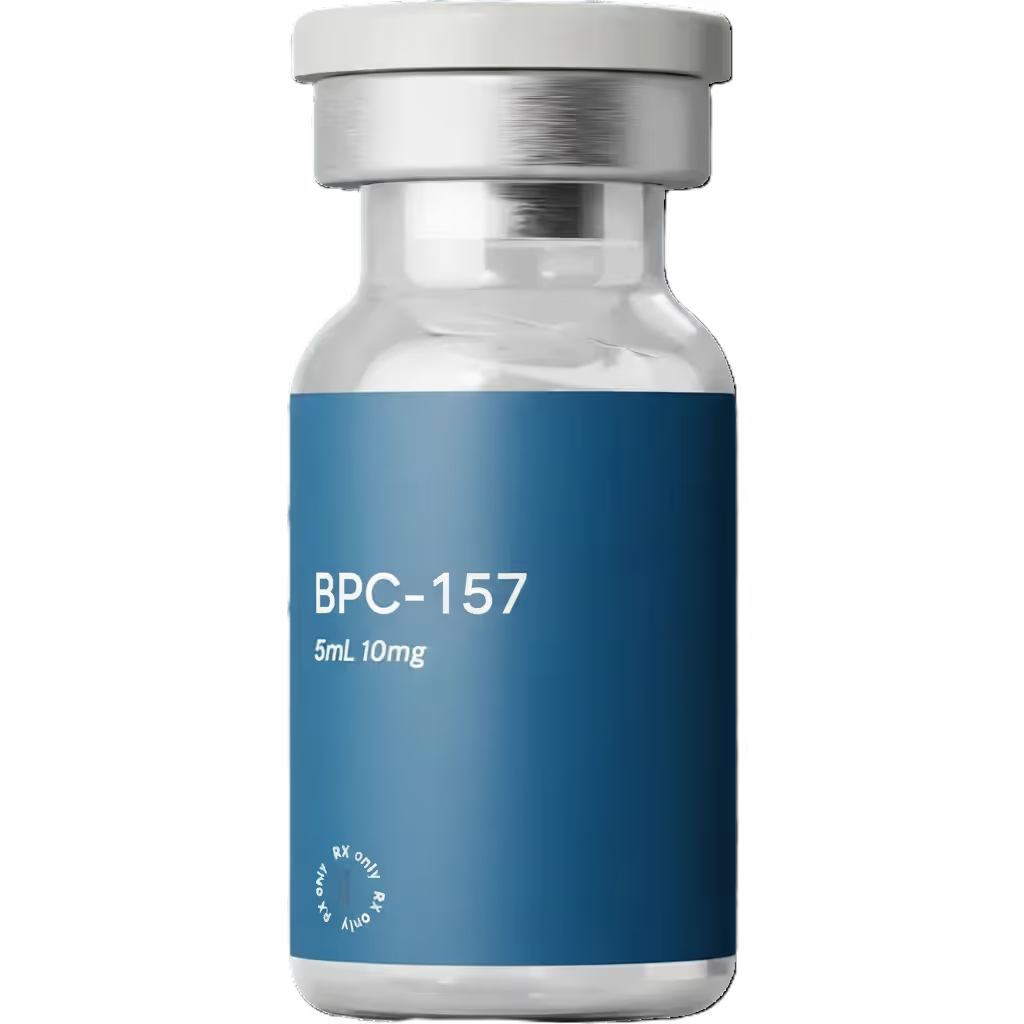
Peptide Protocols for Athletic Recovery: BPC-157 and Muscle Repair Therapies
An educational overview of how peptides such as BPC-157 are discussed in athletic recovery, covering proposed mechanisms, protocol context, safety considerations, the current FDA regulatory picture, and how peptides fit alongside proven recovery fundamentals.
- BPC-157 is a peptide studied for its potential to support tissue repair, reduce inflammation, and promote new blood vessel formation during recovery.
- Most of the strongest BPC-157 data comes from animal and early stage studies, so human evidence for athletic recovery remains limited.
- Some recovery discussions reference other compounds, including one labeled P10, but there is no established evidence base for a P10 peptide in athletic recovery, so it should be treated as experimental at most.
- Proposed mechanisms for recovery peptides include angiogenesis and support for collagen synthesis, which may aid the structural integrity of healing tissue.
- There is no FDA approved or clinically validated human dose for BPC-157, so any protocol must be set and supervised by a licensed provider rather than taken from a website or forum.
- Safety considerations include injection site irritation and the need for proper hygiene, which is why medical oversight matters.
- As of mid 2026, BPC-157 is not FDA approved, was removed from 503A Category 2 in April 2026, and faces advisory committee review in late July 2026.
- Peptides are best viewed as a possible complement to proven recovery fundamentals such as sleep, nutrition, progressive training, and physical therapy, not a replacement for them.
In this article
Athletic recovery is central to improving performance, lowering injury risk, and supporting overall well being. Among the options people explore, peptides such as BPC-157 have drawn attention for their potential to support recovery, muscle repair, and tissue healing. This article looks at how these peptides are proposed to work, what benefits are discussed, what the evidence does and does not show, and how they are considered within a complete recovery plan. Athletes often deal with post workout soreness and slow recovery, and peptide therapies are sometimes presented as a way to address those challenges. The sections below cover specific peptides, their proposed physiological roles, protocol context, safety considerations, and integration into broader recovery strategies.
What are the key peptides used in athletic recovery?
Within athletic recovery, a small number of peptides come up most often because of their proposed roles in muscle repair and tissue healing. BPC-157 is the most discussed candidate, and understanding what it may and may not do is the starting point for any recovery conversation.
How BPC-157 may support muscle repair and injury healing. BPC-157, a peptide derived from gastric juice, is studied for its potential to aid muscle repair and support injury healing by promoting cell survival and reducing inflammation. Research models suggest it may assist healing of tendons and ligaments while encouraging the formation of new blood vessels, a process called angiogenesis. Preclinical and early research has suggested BPC-157 may shorten recovery time for some muscle injuries and support healing of damaged tissue, though large, well controlled human trials are still limited.
A note on other compounds discussed in recovery. Recovery conversations sometimes reference additional compounds, including one labeled P10. It is worth being clear that there is no established evidence base for a P10 peptide in athletic recovery. The label does not correspond to a compound with published human recovery data, and any claims about it rest on anecdote rather than controlled research. Compounds in this category should be treated as experimental at most, and approached only under direct medical supervision, if at all. For that reason, the rest of this article focuses on BPC-157, where at least a body of preclinical and early research exists to discuss.
Which mechanisms may help peptides accelerate muscle healing?
Peptides such as BPC-157 are proposed to influence several biological processes involved in healing. Their suggested effects reach beyond simple repair and into recovery at the cellular level.
Angiogenesis and collagen synthesis. Angiogenesis, the formation of new blood vessels, is important for healing because it helps supply nutrients to the repair site. BPC-157 is recognized in research models for its proposed ability to stimulate endothelial cells, which are central to vascular growth. Its suggested influence on collagen synthesis may also support the structural integrity of repaired tissue, contributing to a more durable recovery.
Effect on inflammation in sports injuries. Inflammation is a common consequence of sports injuries, and peptides are studied for a role in modulating it. The proposed inflammation reducing properties of BPC-157 may help lessen swelling and pain and support a quicker return to activity. Compared with traditional inflammation reducing medications, some discussions suggest peptides could offer benefits with a different side effect profile, though this comparison is not settled by strong human evidence.
Sports medicine reviewers emphasize that the most robust evidence for healing peptides comes from animal models and early stage studies rather than large trials in athletes, and that proven fundamentals still lead recovery.
American Orthopaedic Society for Sports Medicine, 2026
Frequently Asked Questions
What is BPC-157 and why is it discussed for athletic recovery?
BPC-157 is a peptide derived from a protein found in gastric juice. It is studied for proposed roles in tissue repair, inflammation reduction, and new blood vessel formation, which is why it appears in athletic recovery conversations. Most supporting data comes from animal and early stage research, so its benefits in athletes are still being investigated.
Is there good evidence that P10 helps recovery?
No. There is no established evidence base for a P10 peptide in athletic recovery. The label does not match a compound with published human recovery data, and claims about it rest on anecdote rather than controlled trials. It should be treated as experimental at most and only ever considered under the guidance of a licensed medical provider.
How is BPC-157 typically administered, and what dose is used?
It is most often discussed as a subcutaneous injection so it can be absorbed near the target area, though oral forms are also marketed. Importantly, there is no FDA approved or clinically validated human dose. The figures that circulate online come from clinic practice and community forums, not controlled trials, so they should not be treated as a standard. A licensed provider determines whether it is appropriate and sets any dose, with hygiene and oversight in mind.
Is BPC-157 approved by the FDA?
No. BPC-157 is not an FDA approved drug. Its regulatory status is in active review, so anyone considering it should confirm the current position with the FDA and a licensed clinician before proceeding.
Can peptides replace rest, nutrition, and training for recovery?
No. The strongest and most consistent evidence in recovery supports fundamentals such as sleep, adequate protein, sound nutrition, and well managed training. Peptides are best considered as a possible complement to those basics, not a substitute for them
Should competitive athletes be cautious with recovery peptides?
Yes. Several peptides are prohibited in tested sport, and rules change. Any competitive athlete should check current WADA and sport governing body guidance, and consult their provider, before considering peptide therapies.
Protocol context for using peptides in athletic recovery
Using peptides in a recovery routine requires careful attention to dosing, timing, and administration, and these decisions depend on individual needs and the demands of the sport.
Dosing and timing context. There is no FDA approved or clinically validated human dose for BPC-157. The microgram ranges and cycle lengths that circulate online trace to clinic guidance, peptide sellers, and forum repetition rather than controlled human trials, so repetition across sources should not be mistaken for validation. Because of this, any dosing decision belongs with a licensed provider who can weigh the individual situation, and published figures should be treated as background context only, not as a protocol to follow.
Administration considerations. Peptides such as BPC-157 are generally discussed as subcutaneous injections, which allow absorption near the target site. Safety steps matter, including careful site selection and proper hygiene to reduce injection related risks. Regular review of individual response helps a provider refine any protocol over time.
Safety and regulatory considerations
Safety and regulatory compliance are central for both practitioners and patients considering peptide therapies.
Are peptides safe in sports medicine and recovery? Research on BPC-157 used within studied protocols has not raised major safety alarms, but data in humans remain limited, and side effects can occur, including localized irritation at the injection site or mild allergic reactions. Anyone considering peptide therapy should consult a healthcare provider first to review personal health conditions and potential risks.
Current regulatory status of BPC-157. The regulatory picture for BPC-157 is active and shifting. It is not an FDA approved drug. In April 2026 the FDA removed BPC-157 from Category 2 of the 503A bulk substances list, where it had been flagged over safety questions, and scheduled it for review by the Pharmacy Compounding Advisory Committee on July 23 to 24, 2026, with the nominated use under review being ulcerative colitis. Removal from Category 2 is not the same as authorization. The committee vote is advisory, and the FDA would still need to act through formal rulemaking before licensed pharmacies could compound BPC-157 under that pathway. Even a favorable outcome would make it available only by prescription, not over the counter, and not as an FDA approved drug. Because this landscape can change quickly, patients and providers should confirm current status directly with the FDA and a licensed clinician, and competitive athletes should check WADA and sport governing body rules before considering any peptide.
Until adequately powered, randomized human trials answer core questions about dosing and safety, sports medicine bodies do not consider recovery peptides established practice, and regulatory review remains ongoing.Source: FDA Pharmacy Compounding Advisory Committee proceedings and AOSSM commentary, 2026
What recent research suggests about peptide efficacy
Research is what separates promising signals from proven benefit, and the current picture for recovery peptides is mixed.
Trials and study findings. Investigations of BPC-157 have reported improvements in healing time and functional recovery in research models after muscle injury, and these signals are why interest is high. At the same time, the body of human evidence is small, and most robust findings come from animal and early stage work rather than large athletic trials.
How case reports fit in. Individual reports from people who have used peptide therapies sometimes describe reduced recovery time and a faster return to activity. These accounts are worth noting, but they are anecdotal and cannot stand in for controlled trials, so they should be weighed accordingly.
Integrating peptides into a complete recovery plan
For peptides to be considered responsibly, they belong inside a holistic plan rather than on their own.
Peptides alongside conventional therapy and rest. Peptides are best framed as a possible complement to established recovery methods, including rest, nutrition, and physical therapy. Their proposed mechanisms may, in theory, support standard practices, but the foundation of recovery remains the basics. A plan that pairs proven fundamentals with any provider guided peptide use is more sound than one that leans on peptides alone.
Monitoring progress and adjusting treatment. Tracking results is essential to using any therapy well. Helpful metrics include physical performance indicators, subjective pain levels, range of motion, and overall wellness and sleep. Regular assessment lets a provider adjust or discontinue a protocol based on real response rather than expectation.
Conclusion
The recovery case for peptides rests on a clear mechanism story and a still developing evidence base. BPC-157 is studied for proposed roles in angiogenesis, collagen support, and inflammation reduction, and early research offers encouraging signals for tissue and muscle healing. Those signals, though, come mostly from animal and early stage studies, human data are limited, other compounds sometimes named in recovery (such as P10) have no established evidence base at all, and the regulatory status of BPC-157 is in active flux as of mid 2026. The reasonable position is to treat peptides as a possible, provider supervised complement to the recovery fundamentals that the evidence strongly supports: sleep, nutrition, sound training, and physical therapy.
Disclaimer
This article is for educational purposes only and is not medical advice. It does not diagnose, treat, or recommend any therapy, and it does not establish a provider patient relationship. BPC-157 and related peptides are not FDA approved, and their regulatory status can change. Do not start, stop, or change any therapy based on this content. Consult a licensed healthcare provider about your individual situation, and if you are a competitive athlete, confirm current anti doping rules with the relevant authorities before considering any peptide.
In this article